| Date | Event |
|---|---|
| December 1987 | Slobodan Milošević becomes party leader of Serbia. Milošević's rising popularity helps him remove his former mentor Ivan Stambolić from leadership of the League of Communists of Serbia (LCS), and to become leader himself. As party leader, Milošević demands that the federal government restore the autonomous provinces of Vojvodina and Kosovo to Serbia's control. |
| March 1989 | Milošević places Kosovo under Serbian control. As leader of the LCS, Milošević removes Kosovo and Vojvodina's provincial governments, and imposes a police state. Ethnic Albanians are removed from their jobs to make room for Serbians, and thousands of Albanians migrate to Western Europe and North America. |
| May 8, 1989 | Slobodan Milošević becomes leader of the Serbian republic. Due to his popular support, the Serbian assembly removes the president and installs Milošević as president of the Serbian republic. He supports members of the Serbian minority of Kosovo, who object to the fact that Muslim Albanians are the majority in a region sacred to the Serbs. |
| 1989 | Academics form the Democratic League of Kosovo. In response to Milošević's crackdown in Kosovo, a group of academics form the Democratic League of Kosovo (LDK), with Ibrahim Rugova as their leader. They begin a series of non-violent protests against the Serbian government, but their ineffectiveness leads Rugova's opponents to call for more violent means. |
| May 1992 | Pacificist Kosovars begin creating a shadow government. Kosovar Albanians hold unofficial elections, in which they elect Rugova as their president. He begins to create a shadow government. |
| November 21, 1995 | The Dayton Accords convince Kosovar Albanians to look to violent means. After several republics attempt to secede from Yugoslavia, war breaks out. It is resolved with the Dayton Accords in 1995, but these agreements fail to clarify Kosovo's status. As a result, Kosovar Albanians begin to look for more violent means of resisting Serbian control. |
| April 22, 1996 | The Kosovo Liberation Army launches coordinated attacks. Convinced that passive resistance is no longer sufficient to stop Serbian control, a group calling itself the Kosovo Liberation Army (KLA) launches a series of attacks on Serbian police stations. They most likely receive financial support from the Kosovo Albanian diaspora. |
| July 3, 1997 | Milošević becomes president of Yugoslavia. As Milošević's second term as president of Serbia comes to an end, he changes his title to president of the Yugoslavian federation. This federation now consists only of Serbia and Montenegro. |
| November 28, 1997 | The KLA declares its intentions. During a funeral for an Albanian teacher killed by Serbian police, the KLA makes its first public statement. It outlines the KLA's position and objectives, which include the secession of Kosovo from Serbia and the eventual creation of a "Greater Albania," encompassing Kosovo, Albania, and the ethnic Albanian minority of nearby Macedonia. The KLA is later classified as a terrorist organization. |
| January 22, 1998 | Serb forces begin violent crackdowns on Kosovar terrorism. During an armed operation, Serb forces destroy a house in Prekaz, injuring two women, and they kill a man in Klina. While the Interior Ministry denies police involvement, this action effectively launches Serbia's violent crackdown on the Albanian population of Kosovo. |
| September 23, 1998 | UN Security Council demands a ceasefire. After several meetings of the Contact Group (an informal coalition of the United States, Great Britain, Germany, France, Italy, and Russia), the UN Security Council demands a ceasefire in Kosovo. Despite agreeing to these demands, Milošević fails to implement them, and the KLA, Yugoslav, and Serbian forces resume ruthless attacks. |
| January 16, 1999 | Massacre at Racak forces the West to act. Serbian forces massacre 45 civilians, mainly male, at Racak. While killings have continued since the outbreak of the conflict, the massacre at Racak forces the West to intervene. |
| February 6, 1999 | Diplomatic interventions begin but ultimately collapse. The United States leads other members of the international community in diplomatic negotiations in Rambouillet, France, in an attempt to pressure Milošević to end the conflict.However, negotiations break down in March. |
| March 24, 1999 | NATO begins air strikes against Serbian military targets. Following the failed peace negotiations, NATO launches a series of air strikes against Serbian military targets. In response, Yugoslav and Serbian forces drive out all of Kosovo's ethnic Albanians, displacing thousands of people into Albania, Macedonia, and Montenegro. The NATO campaign lasts 11 weeks and expands to Belgrade, where it significantly damages Serbian infrastructure. |
| June 10, 1999 | NATO and Yugoslavia agree to withdraw troops. Following the adoption of a UN peace accord, NATO and Yugoslavia agree to withdraw troops from Kosovo. The UN moves into Kosovo to administer the peace and to oversee the repatriation of Kosovar refugees, including nearly one million ethnic Albanians. Most Serbs leave the region, and despite the peace there are occasional reprisals against those who remain. |
Showing posts with label Kosova. Show all posts
Showing posts with label Kosova. Show all posts
Tuesday, April 9, 2019
Kosovo Genocide Timeline
Timeline Description: The Kosovo genocide was part of the Kosovo
conflict (1998 - 99), in which ethnic Albanians opposed ethnic Serbs and
the Yugoslavian government in Kosovo. Part of the Serbs' strategy was a
major ethnic cleansing of Albanians. The intervention of the North
Atlantic Treaty Organization (NATO) ultimately resolved the conflict.

Saturday, January 26, 2019
Russian peacekeeper in Kosova about Serbs
Taken and translated from memories of Russian soldier who happened to be a peacekeeper during the events in Kosova 1999.
Of course, there was a certain risk in the service, as there was a march from Bosnia to Kosovo for our army to seize the Slatina airfield and stand up with the British there, but it was a matter of a few days, and then, in terms of danger, it was no more dangerous than in somewhere in the center of Russia. With all the ambiguous attitude of the Albanians towards the Russian Army (and you would know how the Serbs treat us, especially the urban ones, you would be very surprised ...).
"Bratushki bratushki, ruski srbska brothers forever", I'd like not to see you for a century!
With such brothers it is better to be an orphan!
<...>
"Home video" for free, at least some fun at night at the post.
But in the end, only Serb pimps profited on all of this ...
Because, voluntarily, involuntarily after watching porn from the guard tower, everyone fled to them to order "fallen women", and Serbs brought the girls.
Duty hookers at that time were some Russian girl from Pskov (I forgot her name) with her "plaintive story" for this category of women on duty, how she came to such a life, what the heck she was doing in this fucking Kosovo, and the second whore was a Serb, a woman of some kind under 185 cm, of a powerful build, almost wider than me in the shoulders ...
By the way, they were delivered to us by a "Serb oppressed by the Albanians"...
<...>
We are located in the city of Leskovac, this is southern Serbia, not far from the border with Kosovo, there are about 50 of us here and our task is to moor equipment withdrawn to Russia from Kosovo. Our team is assembled from different departments, so we "moored" the next train leaving for Russia, showered and went to Kafan (in the Serbian cafe).
The waiter somehow in one of the cafes starts to make claims to us, saying that we are not good people, because we are not defending them, the unfortunate Serbs, to our fate.
To our reasonable question, why they, ethnic Serbs of quite a military age, are in Kafan and are not fighting in Kosovo for their freedom and independence of their homeland, there was no answer.
Earlier, a couple of days ago, another batch of fighters going to Russia, following the same questioner, almost throw him off the rails before the suitable train for the same jerky question ..
How do they have the audacity to come and demand this way?
Hypocrites ...
<...>
In fact, they sold all their leaders, who more or less could do in the interests of Serbia, to the Hague court, they were sent there anyway, and they make complaints to us, why are we leaving?
Well, what I personally forgot with such assholes?
The story was always interesting to me, and I remember why Russia was embroiled in World War I, which cost us tremendous human losses and in fact the loss of the country, and now looking at the Serbs and their attitude towards us, I am very sad to think whether it was worth it intervention in the war because of the Serbs for Russia ...
They basically worth each others - the Serbs and the Albanians.
<...>
In Aynovtsy village, we guarded the school, or rather the post was next to the school. The teachers of this school (Serbians, by the way) did not even consider it necessary to greet us.
When I first came to this post and greeted them, I received only a haughty look in response. As if I started to ask a lot of money from them.
This moment was for me the last straw and the turning point in all these pseudo-patriotic ravings - "Serbs are brothers blah blah".
Serbs or Albanians? With such brothers it is better to be an orphan!
Of course, there was a certain risk in the service, as there was a march from Bosnia to Kosovo for our army to seize the Slatina airfield and stand up with the British there, but it was a matter of a few days, and then, in terms of danger, it was no more dangerous than in somewhere in the center of Russia. With all the ambiguous attitude of the Albanians towards the Russian Army (and you would know how the Serbs treat us, especially the urban ones, you would be very surprised ...).
"Bratushki bratushki, ruski srbska brothers forever", I'd like not to see you for a century!
With such brothers it is better to be an orphan!
<...>
"Home video" for free, at least some fun at night at the post.
But in the end, only Serb pimps profited on all of this ...
Because, voluntarily, involuntarily after watching porn from the guard tower, everyone fled to them to order "fallen women", and Serbs brought the girls.
Duty hookers at that time were some Russian girl from Pskov (I forgot her name) with her "plaintive story" for this category of women on duty, how she came to such a life, what the heck she was doing in this fucking Kosovo, and the second whore was a Serb, a woman of some kind under 185 cm, of a powerful build, almost wider than me in the shoulders ...
By the way, they were delivered to us by a "Serb oppressed by the Albanians"...
<...>
We are located in the city of Leskovac, this is southern Serbia, not far from the border with Kosovo, there are about 50 of us here and our task is to moor equipment withdrawn to Russia from Kosovo. Our team is assembled from different departments, so we "moored" the next train leaving for Russia, showered and went to Kafan (in the Serbian cafe).
The waiter somehow in one of the cafes starts to make claims to us, saying that we are not good people, because we are not defending them, the unfortunate Serbs, to our fate.
To our reasonable question, why they, ethnic Serbs of quite a military age, are in Kafan and are not fighting in Kosovo for their freedom and independence of their homeland, there was no answer.
Earlier, a couple of days ago, another batch of fighters going to Russia, following the same questioner, almost throw him off the rails before the suitable train for the same jerky question ..
How do they have the audacity to come and demand this way?
Hypocrites ...
<...>
In fact, they sold all their leaders, who more or less could do in the interests of Serbia, to the Hague court, they were sent there anyway, and they make complaints to us, why are we leaving?
Well, what I personally forgot with such assholes?
The story was always interesting to me, and I remember why Russia was embroiled in World War I, which cost us tremendous human losses and in fact the loss of the country, and now looking at the Serbs and their attitude towards us, I am very sad to think whether it was worth it intervention in the war because of the Serbs for Russia ...
They basically worth each others - the Serbs and the Albanians.
<...>
In Aynovtsy village, we guarded the school, or rather the post was next to the school. The teachers of this school (Serbians, by the way) did not even consider it necessary to greet us.
When I first came to this post and greeted them, I received only a haughty look in response. As if I started to ask a lot of money from them.
This moment was for me the last straw and the turning point in all these pseudo-patriotic ravings - "Serbs are brothers blah blah".
Serbs or Albanians? With such brothers it is better to be an orphan!
Subscribe to:
Posts (Atom)
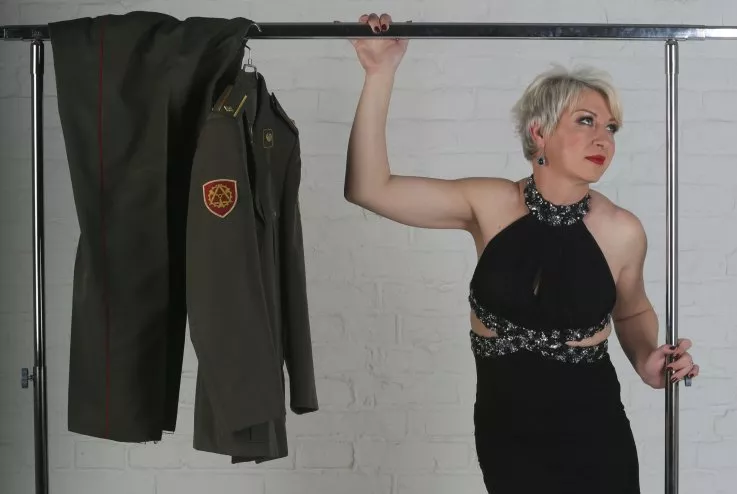
I shall never ever wear trousers - Meet Serbia's First Transgender Army Major
"I shall never ever wear trousers," says the Serbian army's first transgender officer. There may be several other things Hele...
-
Gavrilo Princip was said to be part of a world-wide plot by the Freemasons. Erich von Ludendorff, the Chief of the German Staff, called ...
-
 Israeli officials don't deny foreign press reports that Bosnian Serbs have regularly fired Israeli-made shells at Sarajevo and use Isra...
 -
"I shall never ever wear trousers," says the Serbian army's first transgender officer. There may be several other things Hele...

