| Date | Event |
|---|---|
| December 1987 | Slobodan Milošević becomes party leader of Serbia. Milošević's rising popularity helps him remove his former mentor Ivan Stambolić from leadership of the League of Communists of Serbia (LCS), and to become leader himself. As party leader, Milošević demands that the federal government restore the autonomous provinces of Vojvodina and Kosovo to Serbia's control. |
| March 1989 | Milošević places Kosovo under Serbian control. As leader of the LCS, Milošević removes Kosovo and Vojvodina's provincial governments, and imposes a police state. Ethnic Albanians are removed from their jobs to make room for Serbians, and thousands of Albanians migrate to Western Europe and North America. |
| May 8, 1989 | Slobodan Milošević becomes leader of the Serbian republic. Due to his popular support, the Serbian assembly removes the president and installs Milošević as president of the Serbian republic. He supports members of the Serbian minority of Kosovo, who object to the fact that Muslim Albanians are the majority in a region sacred to the Serbs. |
| 1989 | Academics form the Democratic League of Kosovo. In response to Milošević's crackdown in Kosovo, a group of academics form the Democratic League of Kosovo (LDK), with Ibrahim Rugova as their leader. They begin a series of non-violent protests against the Serbian government, but their ineffectiveness leads Rugova's opponents to call for more violent means. |
| May 1992 | Pacificist Kosovars begin creating a shadow government. Kosovar Albanians hold unofficial elections, in which they elect Rugova as their president. He begins to create a shadow government. |
| November 21, 1995 | The Dayton Accords convince Kosovar Albanians to look to violent means. After several republics attempt to secede from Yugoslavia, war breaks out. It is resolved with the Dayton Accords in 1995, but these agreements fail to clarify Kosovo's status. As a result, Kosovar Albanians begin to look for more violent means of resisting Serbian control. |
| April 22, 1996 | The Kosovo Liberation Army launches coordinated attacks. Convinced that passive resistance is no longer sufficient to stop Serbian control, a group calling itself the Kosovo Liberation Army (KLA) launches a series of attacks on Serbian police stations. They most likely receive financial support from the Kosovo Albanian diaspora. |
| July 3, 1997 | Milošević becomes president of Yugoslavia. As Milošević's second term as president of Serbia comes to an end, he changes his title to president of the Yugoslavian federation. This federation now consists only of Serbia and Montenegro. |
| November 28, 1997 | The KLA declares its intentions. During a funeral for an Albanian teacher killed by Serbian police, the KLA makes its first public statement. It outlines the KLA's position and objectives, which include the secession of Kosovo from Serbia and the eventual creation of a "Greater Albania," encompassing Kosovo, Albania, and the ethnic Albanian minority of nearby Macedonia. The KLA is later classified as a terrorist organization. |
| January 22, 1998 | Serb forces begin violent crackdowns on Kosovar terrorism. During an armed operation, Serb forces destroy a house in Prekaz, injuring two women, and they kill a man in Klina. While the Interior Ministry denies police involvement, this action effectively launches Serbia's violent crackdown on the Albanian population of Kosovo. |
| September 23, 1998 | UN Security Council demands a ceasefire. After several meetings of the Contact Group (an informal coalition of the United States, Great Britain, Germany, France, Italy, and Russia), the UN Security Council demands a ceasefire in Kosovo. Despite agreeing to these demands, Milošević fails to implement them, and the KLA, Yugoslav, and Serbian forces resume ruthless attacks. |
| January 16, 1999 | Massacre at Racak forces the West to act. Serbian forces massacre 45 civilians, mainly male, at Racak. While killings have continued since the outbreak of the conflict, the massacre at Racak forces the West to intervene. |
| February 6, 1999 | Diplomatic interventions begin but ultimately collapse. The United States leads other members of the international community in diplomatic negotiations in Rambouillet, France, in an attempt to pressure Milošević to end the conflict.However, negotiations break down in March. |
| March 24, 1999 | NATO begins air strikes against Serbian military targets. Following the failed peace negotiations, NATO launches a series of air strikes against Serbian military targets. In response, Yugoslav and Serbian forces drive out all of Kosovo's ethnic Albanians, displacing thousands of people into Albania, Macedonia, and Montenegro. The NATO campaign lasts 11 weeks and expands to Belgrade, where it significantly damages Serbian infrastructure. |
| June 10, 1999 | NATO and Yugoslavia agree to withdraw troops. Following the adoption of a UN peace accord, NATO and Yugoslavia agree to withdraw troops from Kosovo. The UN moves into Kosovo to administer the peace and to oversee the repatriation of Kosovar refugees, including nearly one million ethnic Albanians. Most Serbs leave the region, and despite the peace there are occasional reprisals against those who remain. |
Tuesday, April 9, 2019
Kosovo Genocide Timeline
Timeline Description: The Kosovo genocide was part of the Kosovo
conflict (1998 - 99), in which ethnic Albanians opposed ethnic Serbs and
the Yugoslavian government in Kosovo. Part of the Serbs' strategy was a
major ethnic cleansing of Albanians. The intervention of the North
Atlantic Treaty Organization (NATO) ultimately resolved the conflict.

Friday, March 22, 2019
Statues of Gavrilo Princip rise in Serbia
Jul 16, 2015
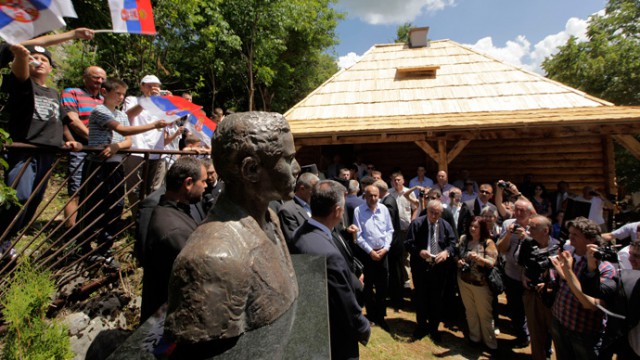
A controversial statue of Gavrilo Princip has been built and unveiled in Serbia. Gavrilo Princip has been blamed for causing the outbreak of World War One when he killed the Austrian/Hungarian Archduke Franz Ferdinand in 1914.
A year ago the house in which Gavrilo was born was restored and opened to the public. The Serbian people herald Gavrilo as a hero who fought for the people’s freedom. While many others in the region believe he was an assassin and the reason that the war started.
The statue of Gavrillo was unveiled this week, coinciding with the 101st year since the of the murdered the prince. Serbia’s president who accepted the statue from the Serb Republic region of Bosnia said that Gavrilo was a hero for the Serbian people and fought for their freedom.
The total number of military and civilian casualties in World War I were about 40 million: estimates range from 15 to 19 million deaths and about 23 million wounded military personnel, ranking it among the deadliest conflicts in human history.
The total number of deaths includes from 9 to 11 million military personnel. The civilian death toll was about 8 million, including about 6 million due to war-related famine and disease. The Triple Entente (also known as the Allies) lost about 6 million military personnel while the Central Powers lost about 4 million. At least 2 million died from diseases and 6 million went missing, presumed dead.
Russian casualties were the most catastrophic: according to United States War Dept, total mobilized force 12,000,000. Total casualties 9,150,000 (including Killed and died 1,700,000, wounded 4,950,000, prisoners and missing 2,500,000).
World War One led to the destruction of the Russian Monarchist Government, a chaotic Civil war and the bloody establishment of a communist experiment over Russians. Thank you Gavrilo Princip, the Hero of Serbia!

A controversial statue of Gavrilo Princip has been built and unveiled in Serbia. Gavrilo Princip has been blamed for causing the outbreak of World War One when he killed the Austrian/Hungarian Archduke Franz Ferdinand in 1914.
A year ago the house in which Gavrilo was born was restored and opened to the public. The Serbian people herald Gavrilo as a hero who fought for the people’s freedom. While many others in the region believe he was an assassin and the reason that the war started.
The statue of Gavrillo was unveiled this week, coinciding with the 101st year since the of the murdered the prince. Serbia’s president who accepted the statue from the Serb Republic region of Bosnia said that Gavrilo was a hero for the Serbian people and fought for their freedom.
The total number of military and civilian casualties in World War I were about 40 million: estimates range from 15 to 19 million deaths and about 23 million wounded military personnel, ranking it among the deadliest conflicts in human history.
The total number of deaths includes from 9 to 11 million military personnel. The civilian death toll was about 8 million, including about 6 million due to war-related famine and disease. The Triple Entente (also known as the Allies) lost about 6 million military personnel while the Central Powers lost about 4 million. At least 2 million died from diseases and 6 million went missing, presumed dead.
Russian casualties were the most catastrophic: according to United States War Dept, total mobilized force 12,000,000. Total casualties 9,150,000 (including Killed and died 1,700,000, wounded 4,950,000, prisoners and missing 2,500,000).
World War One led to the destruction of the Russian Monarchist Government, a chaotic Civil war and the bloody establishment of a communist experiment over Russians. Thank you Gavrilo Princip, the Hero of Serbia!

Tuesday, February 19, 2019
How do Serbians look like?
Let's quote wise site StopSerbophilia

serbs
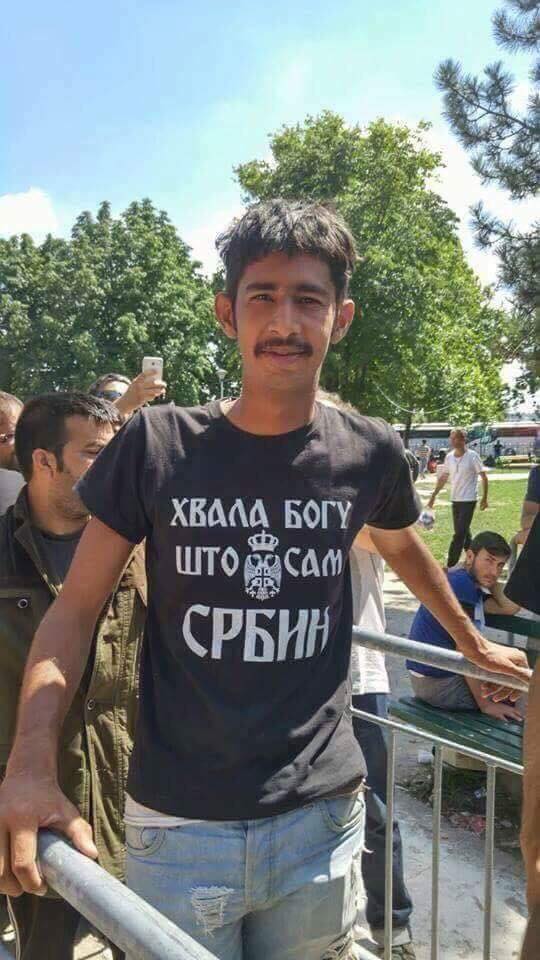
serbian leader
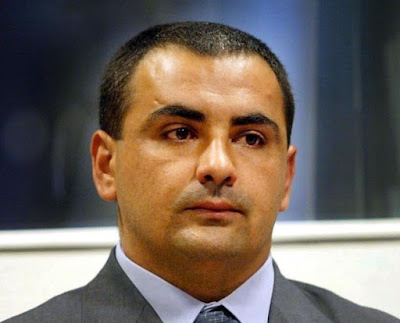
serbian sportsman
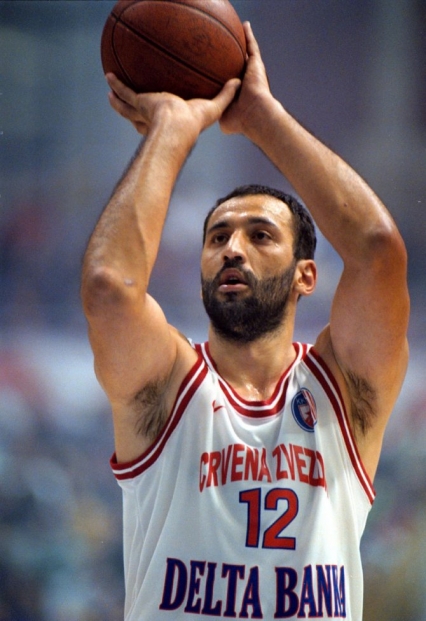
sebian nationalism
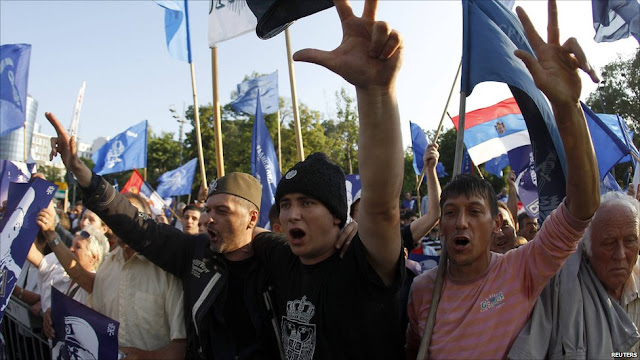
srbian chetnik


serbs


Masson Gavrilo Princip, the national hero of serbs

Pro-serb groups in Russian social networks are overflowing with photos of Serbs with an overly Slavic appearance, which can hardly be distinguished from the Russians. In reality, the average Serb looks more like an Albanian or people from the Caucasus region. A significant part of the Serbs generally descended from the Roma. In any case, apparently this people is very diverse and certainly not like the Eastern Slavs. Further pictures of real Serbs, in particular, Serbian patriots:serbs
serbs
serbian leader
serbian sportsman
sebian nationalism
srbian chetnik
serbs
Masson Gavrilo Princip, the national hero of serbs
Russian blogger on "Serbo-Russian brotherhood"
Taken and translated from "Русские в НДХ" 2011.
I will share my thoughts. No matter how many times people tried to prove that Russians should love, care and cherish the Serbs, I will never understand such rhetoric. No matter how much I heard that I should be for the Serbs in the wars of 1992-1999, I will never be for the Serbs. The reason is simple. No arguments to me would not bring in favor historical correctness of the Serbs, but I know ONE argument against the Serbs - that they are commies. And you know, guys, this one argument against the Serbs interrupts everything, absolutely all the arguments in favor of the Serbs. Communism existed in Serbia until 1999, and up until this point there was a red star on the Serbian military flags. There was no independent Serbian non-communist force during the Yugoslav wars. Under the red star, the Serbs invaded Slovenia and Croatia, the only fault of which was that they did not want to live under serbian Sovietism. The Slovenes during the "Ten Day War" defeated the Jugoslav People Army. The Croatian war lasted longer and was more bloody. And no matter how “chauvinists” the Croats were, they had the full moral right to defend their land from some idiots, in whose heads there was an eerie mix of communism, titoism, Greater Serbia chauvinism (by the way, the Great Serbian doctrine is stolen by them from us, the Russians) and red pseudo-orthodoxy. What is dear to Russians in red Yugoslavia?
I was told that the side of the Serbs must be accepted because, since 1991, they have been fighting against the "aggression of world Zionism." Sorry, I do not know any "international Zionism" and I'm not interested in the fight against it, but I know that in 1991-1999 in the former Yugoslavia the struggle against communism was waged, and the Serbs were the communists, it was they who fought under the red flags and clung red stars to the caps. According to the Soviet patriots, I have to choose the side of the communists, just because they "fought against Zionism" (sic!). Isn't that funny?
The Serbs, anyway, are simply a unique copy of our local commies. All the same "good Putin will help us" and "the Judeo-Masonic West wants to eat us." Just instead of "good Stalin" - "good Tito". Therefore, our "patriotards" fall in love with Serbs, seeing them as their own image in the mirror. Serbs will never understand our idea of anti-communist national Russia. They are already “fixed in anti-Western, “anti-Zionist” discourse. But for Russians, the West is not an enemy, just as the Jews, by and large, are not enemies of the Russians. I will never understand why we, because of some kind of mythical friendship with the Serbs, these Balkan commies, need for no reason to hate the Croats, who did not do anything bad to the Russians? I do not care from the high bell tower on the "victims of the Ustashe", in fact the Serbian analogue of fairy tales. Patriotards, tell me: why do we need the Serbs?
And I will repeat this argument again and again, because it is completely incomprehensible to me why I, a Russian anti-communist, should be standing for commies (cuz Serbs were and are scoops)?
It is quite natural that in the confrontation of anti-communists (Croats) and communists (Serbs) I am siding with anti-communists. And it should be obvious to all Russians.
I will share my thoughts. No matter how many times people tried to prove that Russians should love, care and cherish the Serbs, I will never understand such rhetoric. No matter how much I heard that I should be for the Serbs in the wars of 1992-1999, I will never be for the Serbs. The reason is simple. No arguments to me would not bring in favor historical correctness of the Serbs, but I know ONE argument against the Serbs - that they are commies. And you know, guys, this one argument against the Serbs interrupts everything, absolutely all the arguments in favor of the Serbs. Communism existed in Serbia until 1999, and up until this point there was a red star on the Serbian military flags. There was no independent Serbian non-communist force during the Yugoslav wars. Under the red star, the Serbs invaded Slovenia and Croatia, the only fault of which was that they did not want to live under serbian Sovietism. The Slovenes during the "Ten Day War" defeated the Jugoslav People Army. The Croatian war lasted longer and was more bloody. And no matter how “chauvinists” the Croats were, they had the full moral right to defend their land from some idiots, in whose heads there was an eerie mix of communism, titoism, Greater Serbia chauvinism (by the way, the Great Serbian doctrine is stolen by them from us, the Russians) and red pseudo-orthodoxy. What is dear to Russians in red Yugoslavia?
I was told that the side of the Serbs must be accepted because, since 1991, they have been fighting against the "aggression of world Zionism." Sorry, I do not know any "international Zionism" and I'm not interested in the fight against it, but I know that in 1991-1999 in the former Yugoslavia the struggle against communism was waged, and the Serbs were the communists, it was they who fought under the red flags and clung red stars to the caps. According to the Soviet patriots, I have to choose the side of the communists, just because they "fought against Zionism" (sic!). Isn't that funny?
The Serbs, anyway, are simply a unique copy of our local commies. All the same "good Putin will help us" and "the Judeo-Masonic West wants to eat us." Just instead of "good Stalin" - "good Tito". Therefore, our "patriotards" fall in love with Serbs, seeing them as their own image in the mirror. Serbs will never understand our idea of anti-communist national Russia. They are already “fixed in anti-Western, “anti-Zionist” discourse. But for Russians, the West is not an enemy, just as the Jews, by and large, are not enemies of the Russians. I will never understand why we, because of some kind of mythical friendship with the Serbs, these Balkan commies, need for no reason to hate the Croats, who did not do anything bad to the Russians? I do not care from the high bell tower on the "victims of the Ustashe", in fact the Serbian analogue of fairy tales. Patriotards, tell me: why do we need the Serbs?
And I will repeat this argument again and again, because it is completely incomprehensible to me why I, a Russian anti-communist, should be standing for commies (cuz Serbs were and are scoops)?
It is quite natural that in the confrontation of anti-communists (Croats) and communists (Serbs) I am siding with anti-communists. And it should be obvious to all Russians.
Tuesday, January 29, 2019
Interview with Српска Акција clowns
A brief interview taken by stopserbophilia guys from a marginal and freaky Serbian party "Српска Акција" in 2017, which represents idiocy of Serbian nationalism at its best. Serbian idiot actually believed he's talking to Kremlin's journalist.
1. Firstly, I want to ask you about the perspective of the Russian-Serbian brotherhood. I know that many Russian volunteers fought for Serbia in many wars. Now, the Serbs are fighting for us in Novorossiya. Should Putin or another Russian leader send the troops to liberate Kosovo and other Serbian lands? Should we wait for the new Serbian Orthodox crusade?
It is well known that the Serbian-Russian brotherhood comes not only from our common Orthodox Christian faith and Slavonic culture, but also from the fact that destinies of our two nations are intertwined. Many times throughout history we fought together for freedom, and we will continue to do so. Serbian Armed Forces can easily deal with our enemies in the Balkans. But if the Zionist War Machine (NATO) encroach on us again, we expect Russia to intervene accordingly. Long gone are the shameful days of Yeltsin era.
2. You are Serbian nationalists. What do you fight for? What is your main goal? What do you think about the situation in your country? What is wrong with Serbia?
Serbian Action is the Christian national-revolutionary movement that strives for spiritual and statehood renewal of the Serbian nation. We fight for unified Serbian state with authoritative Christian rule, a strong and socially just country in which we would live as free and proud people, not as enslaved and exploited “citizens”. Unfortunately, Serbia is currently run by the treacherous liberal-socialist/pro-EU coalition which serves the interests of the global financial oligarchy.
3. About Novorossiya and Maidan. What is your opinion on this conflict? Which side do you support?
Funded and organised by the Western power centers, the so-called “Euromaidan” was not only directed against the people of Novorossiya, but against the whole of Ukraine as an Orthodox Christian country. We hoped that Ukrainian people would recognise the enemy’s intention to use Ukraine as a stepping stone for subsequent offensive against Russia. But after the Kiev pro-NATO junta took over the country, we had no choice but to support our brothers and sisters in Novorossiya.
4. Tell me more about Croatia and other Balkan states. Do you have allies among them? What is the origin of the Croats? What do you think about relations with Croatia?
All Balkan states are either members of NATO or occupied by NATO. That’s why there can be no true alliance between us until NATO and its puppets are kicked out of the Balkans. Historically, we’ve had closest relations with Greece and Romania, so we look forward to reforge those alliances. Macedonians [of the Vardar Macedonia] are also dear to us, although they’ve foolishly abandoned their Serbian identity, but still we are practically one and the same people.
As for the Croats, there are many theories about their ancient origin (Slavic, Germanic, Iranian, Turkic). But one thing is for sure: today’s Croats are an ethnic mixture of Hungarians, Aromanians, Jews, Turks, Italians, Albanians, Germans, Czechs, Slovaks, Ukrainians, and – predominantly – catholicized Serbs. Relations? We can’t and we won’t forget the hundreds of thousands of innocent Serbs, especially more than 73.000 children, martyred at the hands of the Croatian Ustashi cutthroats during WW2! And we’ll never give up on Serbian Krajina which is currently occupied by the Zionist-supported “Republic of Croatia”. Only after this injustice is corrected and territory of the Republic of Serbian Krajina is rightfully returned to Serbian people, relations between Serbs and Croats can move forward.
5. As far as I know, your organization is supporting the idea of Greater Serbia. Tell me more about that.
The correct term is Great Serbia, not “greater”. And the meaning of this term is: liberated and unified Serbian lands. In other words, idea of Great Serbia is not about conquering foreign territories, but taking back Serbian homelands and unifying them into one single Serbian state. I'm talking about Serbian Krajina, Bosnia, Herzegovina, Montenegro, Serbia proper (with Vojvodina and Kosovo & Metohija), and Vardar Macedonia. We hope to achieve this, but it won't be easy. It may take many years, perhaps decades, but if not ours, then the next generation of Serbs will create the true Fatherland.
6. I saw this blog ideja-nacije. It is a blog of pro-Ukrainian Serbs. They’re pagans also. What do you think about them? Are they popular in your country?
That blog is run by one confused youngster who has already made several such blogs. There are only a handful of these self-styled “Serbian national-socialists” who support Zionist puppets in “Pravyy Sektor” and other similar groups. The vast majority of the Serbian nationalists support Novorossiya. But that doesn’t mean we hate Ukrainians. Ukraine is also part of a Great and Holy Rus. And as for neopaganism, in Serbia it’s just a youth subculture with only a dozen or so “dedicated” followers. Genuine Serbian nationalism is inseparable from Orthodox Christianity, the faith of our holy Ancestors.
7. What about Šešelj? I watched many of his videos but it’s mostly in Serbian. So, what do you think about him?
We respect Vojislav Šešelj for standing up to the so-called Hague Tribunal and for presenting some historical facts to the international audience. But we don’t support him as a politician for ideological and various other reasons.
8. What about Pan-Slavism and “White Unity” which is popular among European nationalists? Do you want to cooperate with other Europeans? Which organizations do you communicate with?
We believe in the Slavic brotherhood, but real unity between Slavic nations will only be possible after we liberate ourselves from the Zionist/EU/NATO impact. The same goes for the White European unity.
We have contacts and cooperation with several nationalist groups and organisations in Europe. Best cooperation so far we had with Greek ‘Golden Dawn’ (Chrysí Avgí), Romanian ‘New Right’ (Noua Dreapta), Polish ‘Autonomous Nationalists’ (Autonomiczni Nacjonaliści), Russian Imperial Movement (Russkoe Imperskoe Dvizhenie) and German ‘Young National Democrats’ (Junge Nationaldemokraten).
9. What do you think about Aleksandr Dugin?
We don’t agree with some elements of Mr. Dugin’s ideology, but we are grateful for his support to the Serbian cause.
10. There are some “pro-Ukrainian” nationalists in Russia and other European countries. They support actions of today’s Kiev government and most of them are pagans. So, what do you think about them?
Among the nationalists in the West, neopaganism sometimes arises from the disappointment with the heterodox Christianity. However, for many of those self-styled “pagans”, paganism is just a code word for irresponsibility, moral impurity, promiscuity, nihilism, and even Satanism. Neopagans in the Orthodox Christian countries are either complete degenerates or too lazy to get to know the faith of their holy Ancestors. Either way, they are on a dangerously wrong path.
And as for “pro-Ukrainian” nationalists, it’s either ignorance or anti-Russian prejudice (or both).
11. And the last one. Will you help Russia if some kind of pro-Western Maidan-like “revolution” start here?
Of course. Don’t forget that the first Maidan-like revolution took place in Belgrade, 16 years ago. We will do whatever we can to help our Russian brothers and sisters avoid that trap.
Специально для Stopserbophilia.blogspot.com
1. Firstly, I want to ask you about the perspective of the Russian-Serbian brotherhood. I know that many Russian volunteers fought for Serbia in many wars. Now, the Serbs are fighting for us in Novorossiya. Should Putin or another Russian leader send the troops to liberate Kosovo and other Serbian lands? Should we wait for the new Serbian Orthodox crusade?
It is well known that the Serbian-Russian brotherhood comes not only from our common Orthodox Christian faith and Slavonic culture, but also from the fact that destinies of our two nations are intertwined. Many times throughout history we fought together for freedom, and we will continue to do so. Serbian Armed Forces can easily deal with our enemies in the Balkans. But if the Zionist War Machine (NATO) encroach on us again, we expect Russia to intervene accordingly. Long gone are the shameful days of Yeltsin era.
2. You are Serbian nationalists. What do you fight for? What is your main goal? What do you think about the situation in your country? What is wrong with Serbia?
Serbian Action is the Christian national-revolutionary movement that strives for spiritual and statehood renewal of the Serbian nation. We fight for unified Serbian state with authoritative Christian rule, a strong and socially just country in which we would live as free and proud people, not as enslaved and exploited “citizens”. Unfortunately, Serbia is currently run by the treacherous liberal-socialist/pro-EU coalition which serves the interests of the global financial oligarchy.
3. About Novorossiya and Maidan. What is your opinion on this conflict? Which side do you support?
Funded and organised by the Western power centers, the so-called “Euromaidan” was not only directed against the people of Novorossiya, but against the whole of Ukraine as an Orthodox Christian country. We hoped that Ukrainian people would recognise the enemy’s intention to use Ukraine as a stepping stone for subsequent offensive against Russia. But after the Kiev pro-NATO junta took over the country, we had no choice but to support our brothers and sisters in Novorossiya.
4. Tell me more about Croatia and other Balkan states. Do you have allies among them? What is the origin of the Croats? What do you think about relations with Croatia?
All Balkan states are either members of NATO or occupied by NATO. That’s why there can be no true alliance between us until NATO and its puppets are kicked out of the Balkans. Historically, we’ve had closest relations with Greece and Romania, so we look forward to reforge those alliances. Macedonians [of the Vardar Macedonia] are also dear to us, although they’ve foolishly abandoned their Serbian identity, but still we are practically one and the same people.
As for the Croats, there are many theories about their ancient origin (Slavic, Germanic, Iranian, Turkic). But one thing is for sure: today’s Croats are an ethnic mixture of Hungarians, Aromanians, Jews, Turks, Italians, Albanians, Germans, Czechs, Slovaks, Ukrainians, and – predominantly – catholicized Serbs. Relations? We can’t and we won’t forget the hundreds of thousands of innocent Serbs, especially more than 73.000 children, martyred at the hands of the Croatian Ustashi cutthroats during WW2! And we’ll never give up on Serbian Krajina which is currently occupied by the Zionist-supported “Republic of Croatia”. Only after this injustice is corrected and territory of the Republic of Serbian Krajina is rightfully returned to Serbian people, relations between Serbs and Croats can move forward.
5. As far as I know, your organization is supporting the idea of Greater Serbia. Tell me more about that.
The correct term is Great Serbia, not “greater”. And the meaning of this term is: liberated and unified Serbian lands. In other words, idea of Great Serbia is not about conquering foreign territories, but taking back Serbian homelands and unifying them into one single Serbian state. I'm talking about Serbian Krajina, Bosnia, Herzegovina, Montenegro, Serbia proper (with Vojvodina and Kosovo & Metohija), and Vardar Macedonia. We hope to achieve this, but it won't be easy. It may take many years, perhaps decades, but if not ours, then the next generation of Serbs will create the true Fatherland.
6. I saw this blog ideja-nacije. It is a blog of pro-Ukrainian Serbs. They’re pagans also. What do you think about them? Are they popular in your country?
That blog is run by one confused youngster who has already made several such blogs. There are only a handful of these self-styled “Serbian national-socialists” who support Zionist puppets in “Pravyy Sektor” and other similar groups. The vast majority of the Serbian nationalists support Novorossiya. But that doesn’t mean we hate Ukrainians. Ukraine is also part of a Great and Holy Rus. And as for neopaganism, in Serbia it’s just a youth subculture with only a dozen or so “dedicated” followers. Genuine Serbian nationalism is inseparable from Orthodox Christianity, the faith of our holy Ancestors.
7. What about Šešelj? I watched many of his videos but it’s mostly in Serbian. So, what do you think about him?
We respect Vojislav Šešelj for standing up to the so-called Hague Tribunal and for presenting some historical facts to the international audience. But we don’t support him as a politician for ideological and various other reasons.
8. What about Pan-Slavism and “White Unity” which is popular among European nationalists? Do you want to cooperate with other Europeans? Which organizations do you communicate with?
We believe in the Slavic brotherhood, but real unity between Slavic nations will only be possible after we liberate ourselves from the Zionist/EU/NATO impact. The same goes for the White European unity.
We have contacts and cooperation with several nationalist groups and organisations in Europe. Best cooperation so far we had with Greek ‘Golden Dawn’ (Chrysí Avgí), Romanian ‘New Right’ (Noua Dreapta), Polish ‘Autonomous Nationalists’ (Autonomiczni Nacjonaliści), Russian Imperial Movement (Russkoe Imperskoe Dvizhenie) and German ‘Young National Democrats’ (Junge Nationaldemokraten).
9. What do you think about Aleksandr Dugin?
We don’t agree with some elements of Mr. Dugin’s ideology, but we are grateful for his support to the Serbian cause.
10. There are some “pro-Ukrainian” nationalists in Russia and other European countries. They support actions of today’s Kiev government and most of them are pagans. So, what do you think about them?
Among the nationalists in the West, neopaganism sometimes arises from the disappointment with the heterodox Christianity. However, for many of those self-styled “pagans”, paganism is just a code word for irresponsibility, moral impurity, promiscuity, nihilism, and even Satanism. Neopagans in the Orthodox Christian countries are either complete degenerates or too lazy to get to know the faith of their holy Ancestors. Either way, they are on a dangerously wrong path.
And as for “pro-Ukrainian” nationalists, it’s either ignorance or anti-Russian prejudice (or both).
11. And the last one. Will you help Russia if some kind of pro-Western Maidan-like “revolution” start here?
Of course. Don’t forget that the first Maidan-like revolution took place in Belgrade, 16 years ago. We will do whatever we can to help our Russian brothers and sisters avoid that trap.
Saturday, January 26, 2019
Russian peacekeeper in Kosova about Serbs
Taken and translated from memories of Russian soldier who happened to be a peacekeeper during the events in Kosova 1999.
Of course, there was a certain risk in the service, as there was a march from Bosnia to Kosovo for our army to seize the Slatina airfield and stand up with the British there, but it was a matter of a few days, and then, in terms of danger, it was no more dangerous than in somewhere in the center of Russia. With all the ambiguous attitude of the Albanians towards the Russian Army (and you would know how the Serbs treat us, especially the urban ones, you would be very surprised ...).
"Bratushki bratushki, ruski srbska brothers forever", I'd like not to see you for a century!
With such brothers it is better to be an orphan!
<...>
"Home video" for free, at least some fun at night at the post.
But in the end, only Serb pimps profited on all of this ...
Because, voluntarily, involuntarily after watching porn from the guard tower, everyone fled to them to order "fallen women", and Serbs brought the girls.
Duty hookers at that time were some Russian girl from Pskov (I forgot her name) with her "plaintive story" for this category of women on duty, how she came to such a life, what the heck she was doing in this fucking Kosovo, and the second whore was a Serb, a woman of some kind under 185 cm, of a powerful build, almost wider than me in the shoulders ...
By the way, they were delivered to us by a "Serb oppressed by the Albanians"...
<...>
We are located in the city of Leskovac, this is southern Serbia, not far from the border with Kosovo, there are about 50 of us here and our task is to moor equipment withdrawn to Russia from Kosovo. Our team is assembled from different departments, so we "moored" the next train leaving for Russia, showered and went to Kafan (in the Serbian cafe).
The waiter somehow in one of the cafes starts to make claims to us, saying that we are not good people, because we are not defending them, the unfortunate Serbs, to our fate.
To our reasonable question, why they, ethnic Serbs of quite a military age, are in Kafan and are not fighting in Kosovo for their freedom and independence of their homeland, there was no answer.
Earlier, a couple of days ago, another batch of fighters going to Russia, following the same questioner, almost throw him off the rails before the suitable train for the same jerky question ..
How do they have the audacity to come and demand this way?
Hypocrites ...
<...>
In fact, they sold all their leaders, who more or less could do in the interests of Serbia, to the Hague court, they were sent there anyway, and they make complaints to us, why are we leaving?
Well, what I personally forgot with such assholes?
The story was always interesting to me, and I remember why Russia was embroiled in World War I, which cost us tremendous human losses and in fact the loss of the country, and now looking at the Serbs and their attitude towards us, I am very sad to think whether it was worth it intervention in the war because of the Serbs for Russia ...
They basically worth each others - the Serbs and the Albanians.
<...>
In Aynovtsy village, we guarded the school, or rather the post was next to the school. The teachers of this school (Serbians, by the way) did not even consider it necessary to greet us.
When I first came to this post and greeted them, I received only a haughty look in response. As if I started to ask a lot of money from them.
This moment was for me the last straw and the turning point in all these pseudo-patriotic ravings - "Serbs are brothers blah blah".
Serbs or Albanians? With such brothers it is better to be an orphan!
Of course, there was a certain risk in the service, as there was a march from Bosnia to Kosovo for our army to seize the Slatina airfield and stand up with the British there, but it was a matter of a few days, and then, in terms of danger, it was no more dangerous than in somewhere in the center of Russia. With all the ambiguous attitude of the Albanians towards the Russian Army (and you would know how the Serbs treat us, especially the urban ones, you would be very surprised ...).
"Bratushki bratushki, ruski srbska brothers forever", I'd like not to see you for a century!
With such brothers it is better to be an orphan!
<...>
"Home video" for free, at least some fun at night at the post.
But in the end, only Serb pimps profited on all of this ...
Because, voluntarily, involuntarily after watching porn from the guard tower, everyone fled to them to order "fallen women", and Serbs brought the girls.
Duty hookers at that time were some Russian girl from Pskov (I forgot her name) with her "plaintive story" for this category of women on duty, how she came to such a life, what the heck she was doing in this fucking Kosovo, and the second whore was a Serb, a woman of some kind under 185 cm, of a powerful build, almost wider than me in the shoulders ...
By the way, they were delivered to us by a "Serb oppressed by the Albanians"...
<...>
We are located in the city of Leskovac, this is southern Serbia, not far from the border with Kosovo, there are about 50 of us here and our task is to moor equipment withdrawn to Russia from Kosovo. Our team is assembled from different departments, so we "moored" the next train leaving for Russia, showered and went to Kafan (in the Serbian cafe).
The waiter somehow in one of the cafes starts to make claims to us, saying that we are not good people, because we are not defending them, the unfortunate Serbs, to our fate.
To our reasonable question, why they, ethnic Serbs of quite a military age, are in Kafan and are not fighting in Kosovo for their freedom and independence of their homeland, there was no answer.
Earlier, a couple of days ago, another batch of fighters going to Russia, following the same questioner, almost throw him off the rails before the suitable train for the same jerky question ..
How do they have the audacity to come and demand this way?
Hypocrites ...
<...>
In fact, they sold all their leaders, who more or less could do in the interests of Serbia, to the Hague court, they were sent there anyway, and they make complaints to us, why are we leaving?
Well, what I personally forgot with such assholes?
The story was always interesting to me, and I remember why Russia was embroiled in World War I, which cost us tremendous human losses and in fact the loss of the country, and now looking at the Serbs and their attitude towards us, I am very sad to think whether it was worth it intervention in the war because of the Serbs for Russia ...
They basically worth each others - the Serbs and the Albanians.
<...>
In Aynovtsy village, we guarded the school, or rather the post was next to the school. The teachers of this school (Serbians, by the way) did not even consider it necessary to greet us.
When I first came to this post and greeted them, I received only a haughty look in response. As if I started to ask a lot of money from them.
This moment was for me the last straw and the turning point in all these pseudo-patriotic ravings - "Serbs are brothers blah blah".
Serbs or Albanians? With such brothers it is better to be an orphan!
Girkin-Strelkov on Serbians
Игорь Стрелков. Боснийский дневник (2-й Русский Добровольческий Отряд в Боснии 1992-1993 годы)
Meanwhile, the mood in the detachment (numbering eight people in the ranks) was far from the best. The Russians have already seen that the Serbs do not have any share of the courage that glorified them in the 1st World War; that the “итервентна чета” of Bobán is fighting for the sake of plundering the captured villages, and submit themselves very reluctantly for bullets; it turns out that the Serbs paid well to "recruiters" in Moscow, but did not intend to pay the Russians here. Then, however, they began to pay 100-150 German marks a month. Finally, the Russians had heard enough about the atrocities of the Serbs from themselves, and although Muslims and Croats are no better, they did not make the most favorable impression. Nevertheless, the conviction reigned: we must protect ordinary Serbs who (unlike Boban’s mercenaries) have nowhere to run and who are not involved in any atrocities.
The unsuccessful battle of December 3 largely demoralized the squad. In conversations, not too flattering reviews about the Serbs (especially about the command) sounded constantly. Began cases of drunkenness. Some fighters, using their "volunteer" position, began uncontrolled "trips" to the city, taking drunkenness and shooting there.
Meanwhile, the situation in the Vyshegrad region remained rather unclear. As it turned out from the testimony of the prisoner, the attack of our brigade began less than a day before the same attack from the Muslims. Having lost in the battle all the artillery they have in the area and about 40 people, they, however, did not quite lose their combat capability. So, on the night of the 8th, they approached the positions recently occupied by the Serbs and fired them from small arms. On the "position" was sitting the so-called "Didova army" (elderly militiamen). Naturally, as soon as the shelling started, all their serbian "cohort" unanimously ran, losing one person killed.
On December 13, the detachment went to Belgrade to rest, where they stayed for 5 days. The city left a not very pleasant impression. Although we were well received (we lived in a private house in Novo-Pazovo and stayed at the club of the Serbian People’s Renaissance - the monarchist party), the “international” market, the abundance of young Russian prostitutes, clashes with individual Serbs (“Go home !") etc.

See also: All Russians were killed, all coward Serbs flew away
Subscribe to:
Posts (Atom)
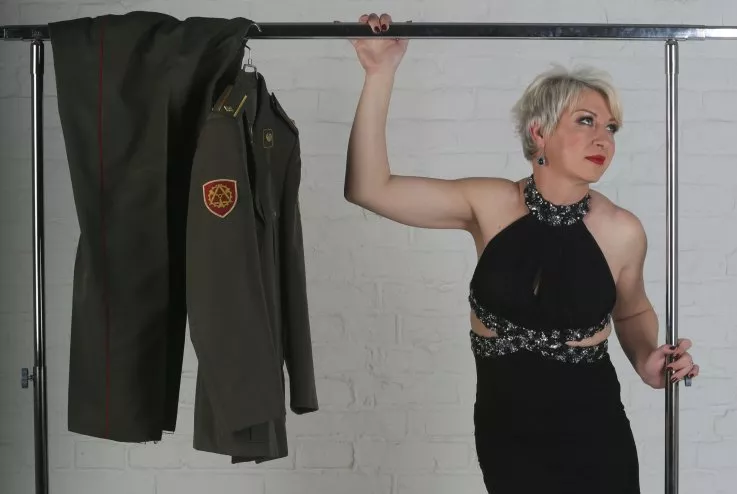
I shall never ever wear trousers - Meet Serbia's First Transgender Army Major
"I shall never ever wear trousers," says the Serbian army's first transgender officer. There may be several other things Hele...
-
Gavrilo Princip was said to be part of a world-wide plot by the Freemasons. Erich von Ludendorff, the Chief of the German Staff, called ...
-
 Israeli officials don't deny foreign press reports that Bosnian Serbs have regularly fired Israeli-made shells at Sarajevo and use Isra...
 -
"I shall never ever wear trousers," says the Serbian army's first transgender officer. There may be several other things Hele...

